Table of Contents
Memory Decoding
Try this memory test: Study each face and compose a vivid image for the person’s first and last name. Rose Leo, for example, could be a rosebud and a lion. Fill in the blanks on the next page. The Examinations School at Oxford University is an austere building of oak-paneled rooms, large Gothic windows, and looming portraits of eminent dukes and earls. It is where generations of Oxford students have tested their memory on final exams, and it is where, last August, 34 contestants gathered at the World Memory Championships to be examined in an entirely different manner.
Passage
A. In timed trials, contestants were challenged to look at and then recite a two-page poem, memorize rows of 40- digit numbers, recall the names of 110 people after looking at their photographs, and perform seven other feats of extraordinary retention. Some tests took just a few minutes; others lasted hours. In the 14 years since the World Memory Championships was founded, no one has memorized the order of a shuffled deck of playing cards in less than 30 seconds.
That nice round number has become the four-minute mile of competitive memory, a benchmark that the world’s best “mental athletes,” as some of them like to be called, are closing in on. Most contestants claim to have just average memories, and scientific testing confirms that they’re not just being modest. Their feats are based on tricks that capitalize on how the human brain encodes information. Anyone can learn them.
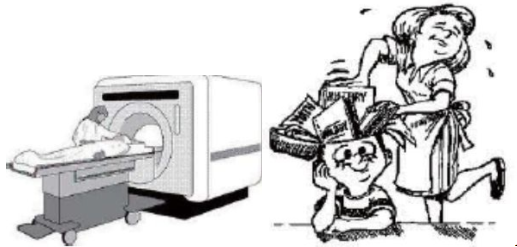
B. Psychologists Elizabeth Valentine and John Wilding, authors of the monograph Superior Memory, recently teamed up with Eleanor Maguire, a neuroscientist at University College London to study eight people, including Karsten, who had finished near the top of the World Memory Championships. They wondered if the contestants’ brains were different in some way. The researchers put the competitors and a group of control subjects into an MRI machine and asked them to perform several different memory tests while their brains were being scanned.
When it came to memorizing sequences of three-digit numbers, the difference between the memory contestants and the control subjects was, as expected, immense. However, when they were shown photographs of magnified snowflakes, images that the competitors had never tried to memorize before, the champions did no better than the control group. When the researchers analyzed the brain scans, they found that the memory champs were activating some brain regions that were different from those the control subjects were using. These regions, which included the right posterior hippocampus, are known to be involved in visual memory and spatial navigation.
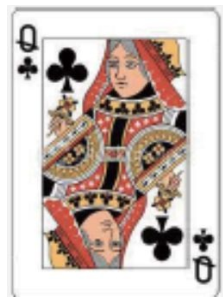
C. It might seem odd that the memory contestants would use visual imagery and spatial navigation to remember numbers, but the activity makes sense when their techniques are revealed Cooke, a 23-year-old cognitivescience graduate student with a shoulder-length mop of curly hair, is a grand master of brain storage. He can memorize the order of 10 decks of playing cards in less than an hour or one deck of cards in less than a minute. He is closing in on the 30-second deck. In the Lamb and Flag, Cooke pulled out a deck of cards and shuffled it. He held up three cards the 7 of spades, the queen of clubs, and the 10 of spades. He pointed at a fireplace and said, “Destiny’s Child is whacking Franz Schubert with handbags.” The next three cards were the king of hearts, the king of spades, and the jack of clubs.
D. How did he do it? Cooke has already memorized a specific person, verb, and object that he associates with each card in the deck. For example, for the 7 of spades, the person (or, in this case, persons) is always the singing group Destiny’s Child, the action is surviving a storm, and the image is a dinghy. The queen of clubs is always his friend Henrietta, the action is thwacking with a handbag, and the image is of wardrobes filled with designer clothes. When Cooke commits a deck to memory, he does it three cards at a time.
Every three-card group forms a single image of a person doing something to an object. The first card in the triplet becomes the person, the second the verb, the third the object. He then places those images along a specific familiar route, such as the one he took through the Lamb and Flag. In competitions, he uses an imaginary route that he has designed to be as smooth and downhill as possible. When it comes time to recall, Cooke takes a mental walk along his route and translates the images into cards. That’s why the MRIs of the memory contestants showed activation in the brain areas associated with visual imagery and spatial navigation.
E. The more resonant the images are, the more difficult they are to forget. But even meaningful information is hard to remember when there’s a lot of it. That’s why competitive memorizers place their images along an imaginary route. That technique, known as the loci method, reportedly originated in 477 B.C. with the Greek poet Simonides of Ceos. Simonides was the sob survivor of a roof collapse that killed all the other guests at a royal banquet The bodies were mangled beyond recognition, but Simonides was able to reconstruct the guest list by closing his eyes and recalling each individual around the dinner table.
What he had discovered was that our brains are exceptionally good at remembering images and spatial information. Evolutionary psychologists have offered an explanation: Presumably our ancestors found it important to recall where they found their last meal or the way back to the cave. After Simonides’ discovery the loci method became popular across ancient Greece as a trick for memorizing speeches and texts. Aristotle wrote about it, and later a number of treatises on the art of memory were published in Rome. Before printed books, the art of memory was considered a staple of classical education, on a par with grammar, logic, and rhetoric.
F. The most famous of the naturals was the Russian journalist S. V. Shereshevski, who could recall tong lists of numbers memorized decades earlier, as well as poems, strings of nonsense syllables, and just about anything else he was asked to remember. “The capacity of his memory had no distinct limits,” wrote Alexander Luria, the Russian psychologist who studied Shereshevski from the 1920s to the 1950s. Shereshevski also had synesthesia, a rare condition in which the senses become intertwined. For example, every number may be associated with a color or every word with a taste. Synesthetic reactions evoke a response in more areas of the brain, making memory easier.
G. K. Anders Ericsson, a Swedish-born psychologist at Florida State University, thinks anyone can acquire Shereshevski’s skills. He cites an experiment with s. R, an undergraduate who was paid to take a standard test of memory called the digit span for one hour a day, two or three days a week. When he started, he could hold, like most people, only about seven digits in his head at any given time (conveniently, the length of a phone number). Over two years, s. F. completed 250 hours of testing. By then, he had stretched his digit span from 7 to more than 80.
The study of s. F. led Ericsson to believe that innately superior memory doesn’t exist at all When he reviewed original case studies of naturals, he found that exceptional memorizers were using techniques —sometimes without realizing it—and tots of practice. Often, exceptional memory was only for a single type of material, like digits. “If we took at some of these memory tasks, they’re the kind of thing most people don’t even waste one hour practicing, but if they wasted 50 hours, they’d be exceptional at it,” Ericsson says. It would be remarkable, he adds, to find a “person who is exceptional across a number of tasks. I don’t think that there’s any compelling evidence that there are such people.”
Questions
Questions 27-31
The reading Passage has seven paragraphs A-G.
Which paragraph contains the following information? Write the correct letter A-G in boxes 27-31 on your answermsheet.
27 The reason why competence of super memory is significant in academic settings
28 Mention of a contest for extraordinary memory held in consecutive years
29 An demonstrative example of extraordinary person did an unusual recalling game Ị
30 A belief that extraordinary memory can be gained though enough practice
31 A depiction of rare ability which assist the extraordinary memory reactions
Questions 32-36
Complete the following summary of the paragraphs of Reading Passage, using no more than three words from the Reading Passage for each answer.
Write your answers in boxes 32-36 on your answer sheet.
Using visual imagery and spatial navigation to remember numbers are investigated and explained. A man called Ed Cooke in a pub, spoke a string of odd words when he held 7 of the spades (the first one of the any cards group) was remembered as he encoded it to a…….32……..and the card deck to memory are set to be one time of a order of…….33.…….; When it comes time to recall, Cooke took a…….34……..along his way and interpreted the imaginary scene into cards. This superior memory skill can be traced back to Ancient Greece, the strategy was called …….35…….. which had been an major subject was in ancient…….36……..
Questions 37-38
Choose TWO correct letter, A-E
Write your answers in boxes 37-38 on your answer sheet.
‘According to World Memory Championships, what activities need good memory?
A order for a large group of each digit
B recall people’s face
C resemble a tong Greek poem
D match name with pictures and features
E recall what people ate and did yesterd
Questions 39-40
Choose TWO correct letter, A-E
Write your answers in boxes 39-40 on your answer sheet.
What is the result of Psychologists Elizabeth Valentine and John Wilding *s MRI Scan experiment find out?
A. the champions ‘ brains is different in some way from common people
B difference in brain of champions’ scan image to control subjects are shown when memorizing sequences of three-digit numbers
C champions did much worse when they are asked to remember photographs
D the memory-champs activated more brain regions than control subjects
E there is some part in the brain coping with visual and spatial memory
Answers
Below are the answers, key words, synonyms and full explanations for the IELTS Reading passage Memory Decoding (Passage 3, Questions 27–40).
Questions 27–31: Matching Information (paragraphs A–G)
27. The reason why competence of super memory is significant in academic settings.
Answer: E
Key words: the art of memory was considered a staple of classical education, on a par with grammar, logic, and rhetoric
Synonyms: significance of memory in academic settings = memory was a staple of classical education = “Before printed books, the art of memory was considered a staple of classical education, on a par with grammar, logic, and rhetoric”
Explanation: Paragraph E explains that the art of memory was a core part of classical education → E.
28. Mention of a contest for extraordinary memory held in consecutive years.
Answer: A
Key words: In the 14 years since the World Memory Championships was founded
Synonyms: a contest held in consecutive years = the annual World Memory Championships = “In the 14 years since the World Memory Championships was founded, no one has memorized the order of a shuffled deck of playing cards in less than 30 seconds”
Explanation: Paragraph A refers to the yearly World Memory Championships → A.
29. A demonstrative example of an extraordinary person doing an unusual recalling game.
Answer: C
Key words: In the Lamb and Flag, Cooke pulled out a deck of cards … He pointed at a fireplace and said, “Destiny’s Child is whacking Franz Schubert with handbags”
Synonyms: a demonstration of an unusual recalling game = Cooke’s live card demonstration in the pub = “Cooke pulled out a deck of cards and shuffled it. He held up three cards … ‘Destiny’s Child is whacking Franz Schubert with handbags'”
Explanation: Paragraph C shows Cooke demonstrating his card-memorising trick in the pub → C.
30. A belief that extraordinary memory can be gained through enough practice.
Answer: G
Key words: K. Anders Ericsson … thinks anyone can acquire Shereshevski’s skills … innately superior memory doesn’t exist at all
Synonyms: extraordinary memory can be gained through practice = Ericsson believes anyone can acquire the skills = “K. Anders Ericsson … thinks anyone can acquire Shereshevski’s skills … exceptional memorizers were using techniques … and lots of practice”
Explanation: Paragraph G presents Ericsson’s belief that memory skill comes from practice, not innate gift → G.
31. A depiction of a rare ability which assists the extraordinary memory reactions.
Answer: F
Key words: Shereshevski also had synesthesia, a rare condition … Synesthetic reactions evoke a response in more areas of the brain, making memory easier
Synonyms: a rare ability assisting memory = synesthesia, which activates more of the brain and eases memory = “Shereshevski also had synesthesia, a rare condition in which the senses become intertwined … making memory easier”
Explanation: Paragraph F describes synesthesia, a rare condition that aids memory → F.
Questions 32–36: Summary Completion (NO MORE THAN THREE WORDS)
32. the 7 of spades … was remembered as he encoded it to a ______.
Answer: specific person
Key words: Cooke has already memorized a specific person, verb, and object … The first card in the triplet becomes the person
Synonyms: encoded the card to a ______ = a specific person associated with each card = “Cooke has already memorized a specific person, verb, and object that he associates with each card … The first card in the triplet becomes the person”
Explanation: The first card of each group is encoded as a specific person → specific person.
33. the card deck … is set to be one order of ______.
Answer: three cards
Key words: When Cooke commits a deck to memory, he does it three cards at a time
Synonyms: an order of ______ = three cards at a time = “When Cooke commits a deck to memory, he does it three cards at a time. Every three-card group forms a single image”
Explanation: Cooke memorises the deck in groups of three cards → three cards.
34. When it comes time to recall, Cooke took a ______ along his way.
Answer: mental walk
Key words: Cooke takes a mental walk along his route and translates the images into cards
Synonyms: took a ______ along his way = takes a mental walk along his route = “When it comes time to recall, Cooke takes a mental walk along his route and translates the images into cards”
Explanation: To recall, Cooke takes a mental walk along his imagined route → mental walk.
35. the strategy was called ______.
Answer: loci method
Key words: That technique, known as the loci method, reportedly originated in 477 B.C.
Synonyms: the strategy was called ______ = the loci method = “That technique, known as the loci method, reportedly originated in 477 B.C. with the Greek poet Simonides of Ceos”
Explanation: The route technique is called the loci method → loci method.
36. which had been a major subject in ancient ______.
Answer: education
Key words: the art of memory was considered a staple of classical education, on a par with grammar, logic, and rhetoric
Synonyms: a major subject in ancient ______ = a staple of classical education = “the art of memory was considered a staple of classical education, on a par with grammar, logic, and rhetoric”
Explanation: The art of memory was a major part of ancient (classical) education → education.
Questions 37–38: Choose TWO letters (A–E)
According to the World Memory Championships, what activities need good memory?
Answer: A (order for a large group of each digit) and D (match name with pictures and features)
Key words: memorize rows of 40-digit numbers … recall the names of 110 people after looking at their photographs
Synonyms: a large group of each digit = rows of 40-digit numbers; match name with pictures = recall names of people from photographs = “memorize rows of 40-digit numbers, recall the names of 110 people after looking at their photographs”
Explanation: Two listed feats are memorising long digit rows (A) and matching names to photographs (D). Option C is wrong (the poem is not “Greek”); B and E are not mentioned → A, D.
Questions 39–40: Choose TWO letters (A–E)
What did Psychologists Elizabeth Valentine and John Wilding’s MRI scan experiment find?
Answer: B (a difference appeared when memorizing sequences of three-digit numbers) and E (a brain part copes with visual and spatial memory)
Key words: When it came to memorizing sequences of three-digit numbers, the difference … was … immense … regions, which included the right posterior hippocampus, are known to be involved in visual memory and spatial navigation
Synonyms: difference shown for three-digit numbers = an immense difference on three-digit sequences; a brain part for visual/spatial memory = the right posterior hippocampus for visual memory and spatial navigation = “the difference between the memory contestant and the control subjects was … immense … the right posterior hippocampus … involved in visual memory and spatial navigation”
Explanation: The scans showed a big difference on three-digit numbers (B) and pinpointed brain regions for visual and spatial memory (E). Champions did “no better” (not “much worse”) on snowflakes, and the regions were “different”, not “more” — so C and D are wrong → B, E.
Answer Key (Quick Reference)
| Q | Answer | Q | Answer |
|---|---|---|---|
| 27 | E | 34 | mental walk |
| 28 | A | 35 | loci method |
| 29 | C | 36 | education |
| 30 | G | 37 | A |
| 31 | F | 38 | D |
| 32 | specific person | 39 | B |
| 33 | three cards | 40 | E |


